

Which Am I – A Sex Addict or A Bonobo?
Am I a sex addict? The Boyfriend certainly thought I was. I recall the frown on his very concerned face when he asked me if I thought I might be. I laughed and told him, “I really like sex and that is not the same as being an addict.”
Nevertheless, he persisted in hoping that competitive sports, yoga or crafting would fulfill me and return my desire for sex to within the “normal” range. Whatever “normal” is?
Of course normal is extremely subjective. My current “normal” would shock other people who’s “normal” would drive me into depression!
When I was a young adult, magazines were filled with articles advising readers on how much sex is the right amount of sex – I guess this is a good place to ascertain what is deemed “normal” by current society. So I questioned DuckDuckGo (yep, I have quit Google – it’s easy, do it!) and was fed dozens of articles telling me how much sex is the correct, aka “normal”, amount of sex.
Women’s Health quoted a 2020 UK survey which found that 27% of the population was having sex in any given week, of which 11% had sex once a week, 7% twice a week and 9% three times a week.
Only 9% of the UK adult population has sex 3 times a week – I sometimes match that in a day! My “normal” is to have sex with another human being between 7 and 12 times a week. Sex matters to me and I ensure I get a lot.
However, according to the 2020 survey, it is “normal” (as in the lived experience) for 73% of the population to have sex less frequently than once a week. Through the eyes of one of these 73% the amount of sex I have must seem completely incredible.
Before I continue I want to make clear that I was one of the 73%.
For 6 years I didn’t even have sex as much as once a week. For most of that period I had absolutely no sex at all.
The lack of sex affected me profoundly.
I put on weight. I lost huge amounts of confidence. I lost energy – I felt sluggish and “grey” day in, day out. I became heavily depressed and I would have hit the bottle if I wasn’t very intolerant to alcohol.
I was highly stressed, very controlling and critical of people in my life. I didn’t laugh, I didn’t smile, I snapped and shouted. I was very unhappy and was not fun to be around. I caught every cold going and would often remain ill for months at a time.
No sex absolutely sucks. I know this, and can adamantly state it, because I have been there (and got the t-shirt).
The Boyfriend rescued me from my life of no sex but within a year he wanted me to return to comfortably “normal” – which for 73% of the British population is sex less frequently than once a week.
I was not going back to borderline suicidal to keep him comfortable. So, in his eyes, I became “abnormal” and possibly even a “sex addict.”
There is a lot of judgement in the term “sex addict” and I think it is bandied about quite carelessly by people, very often in the 73%, of the lucky people in the 9%. I think sometimes people genuinely are sex addicts, but I also know that enjoying a lot of sex does not make you an addict.
Addiction, according to Gabor Maté, is when someone has a compulsion to do a behaviour, that they cannot stop, despite knowing that it is harmful (or detrimental) to them. With drugs and alcohol it is easy to see how the addiction is harmful to the addict. Lives and bodies collapse with the misuse of both substances.
Maté points to his own shopping habits as an addiction. It harms him to go binge shopping. His bank account takes hit after hit as he compulsively buys more things that he doesn’t need for the dopamine hit. And despite knowing that his compulsive shopping is detrimental to his life, he struggles to stop his compulsion to shop, making his shopping habit, in his eyes, an addiction.
My understanding of the term “addiction” (thanks to Gabor Maté) is that you have to be compelled to do a behaviour that is harmful to you. Compelled and harmful being the two key words.
I always suspected that The Boyfriend accused me of being a sex addict because my behaviour made him uncomfortable and even, at times, caused him pain (ie harm), my choices certainly felt detrimental to him. His opposition to my choices were valid, he had every right to express discomfort and dismay and to ask for our relationship to return to “normal”. These are valid relationship issues which he could air because I was always honest with him and open to conversations. But are his feelings enough to diagnose me with an addiction?
To be an addiction my behaviour needed to (1) cause me harm and (2) needed to be more than a conscious and thoughtfully researched choice about how I wanted to live my life as an adult, it had to be a compulsion – the opposite to a conscious choice.
Because I do not live in Victorian times when women were locked away in asylums for far less than being overly sexual (though that was definitely a valid reason to lock us away) I am allowed to examine his claim and refute it robustly.
For his assertion to be plausible, my behaviour had to harm me in some way –
physically, emotionally, mentally, spiritually – maybe in all four ways? Because sex, however much you have, is not an addiction until it is causing you harm in at least one of these four ways. So, let’s examine the four ways, one by one, to see what harm I could have been doing to myself.
Physical harm? Sex has been made to seem terrifyingly harmful. For decades, if you are lucky enough to receive any sex education, it focuses almost exclusively on the sexual diseases you can catch if you are careless enough to find yourself having any kind of sexual intimacy.
If you came of age during the HIV/Aids crisis as I did, you were convinced that if you let anyone near you without being fully encased in a condom you would catch HIV, and die.
If you are in my children’s generation you are told by the school nurse that if you don’t accept the HPV vaccine you will catch cancer from sex, and die.
My whole adult life I have witnessed campaign after campaign brainwashing us into fearing the physical harm we will come to if/when we have sex (note the absence of fearmongering around, say, using motor cars which are both convenient and deathly, with a vast industry to maintain.)
The strange (and maybe dangerous?) truth is that sex is far from harmful for us. In fact sex, and lots of it, is really, really good for us.
There is the obvious advantage of a massive download of feel good chemicals which keep your body and your mind in tip top condition even preventing the onset of Alzheimer’s.
Orgasm works out your pelvic floor muscles and the muscles of your vagina arguably way better than kegel exercises do. Sex gets your heart pumping and your blood flowing, if you are including breathwork in your sex that is an added advantage.
Sex makes you happy and sex makes you smile. When you smile your body is provably more relaxed and flowing with feel good chemicals. Sex helps your body enter the parasympathetic rest and digest state. Which is why our nearest relatives, the bonobo chimps, are engaged in sex for large proportions of every day.
Thanks to the sex-negative sex education we receive, we are programmed to be convinced that sex leads to disease. This is an old idea from Victorian times (if not before) when it was believed that highly sexed women (i.e. prostitutes and nymphomaniacs – essentially the same women) spontaneously created disease in their vaginas.
We haven’t, as a society, moved on significantly from this belief. If you go to an STI clinic in the UK for a routine check up, you are immediately deemed to be at a higher risk of infection if you have had sex with a professional (or someone from Africa) – the British NHS perpetuating both racism and sex worker phobia in this initial question on their intake forms.
Using the tube, flying in an aeroplane, going to the cinema or theatre all come with the risk of infection. It’s long confused and frustrated me that we categorise infections of, say, the throat as normal and treatable by a GP or pharmacist, but infections of the vagina or cock must be dealt with in a different clinic with loads of shame and judgement attached. Why?
Well, I know why, it’s to fill us with fear around sex to stop us enjoying something that is free and empowering and makes us healthy. Sick people are more profitable. Sex makes your body strong, vibrant, alive and healthy. There is no money in happy and healthy, so we are fed vast amounts of propaganda from puberty onwards to make sure we fear the very thing that could keep us happy and well.
The most serious physical illness or injury that I have had in my adult life was breaking my ankle whilst walking the dog. I still enjoy walking and I have never accused any local dog walker, some of whom walk their dogs 3 times a day, that they are dog walking addicts!
Like walking, yoga, swimming, weight training, cycling, sex is good for you. Like walking, swimming, cycling, yoga and weight training there are associated risks which are good to be informed about so that you make good choices. Life is filled with risks which we manage by, say, wearing a helmet when we cycle on the roads.
I very strongly refute that sex harms you physically and that there is any such thing as too much sex.
To me that’s like claiming there is such a thing as too much breathing!
Emotional harm? We know that the “appropriate” amount of sex is really good for you emotionally. Oxytocin, released in orgasm, is the hormone that bonds us to other people, building intimacy, making us feel safe, growing love.
The reason why bonobos (our closest biological relative with whom we share 98.7% of our DNA) engage in so much sex within their social groupings is, in part, to strengthen groups bonds so that the individuals within the group are emotionally healthy.
Humans are emotionally fragile in our disconnected, disassociated, egoic world. When we have sex it is not often the kind that builds intimacy. The sex early humans engaged in for the first 3 millennia of our existence has been twisted and contorted into a shadow of its former self.
It is highly likely that for our first 295,000 years humans lived far more like bonobos than like modern day humans, so it’s useful to consider how bonobos spend their time and how they engage in acts of sexual intimacy.
Bonobos are a notably peaceful species, interestingly (to this whore anyway) their troops are led by females and they solve any disputes within their community using sex (genius!) Annoyingly for humans who are too busy working to have time for sex, bonobos spend far more time each day fucking and grooming each other than they do in the “work” of feeding themselves.
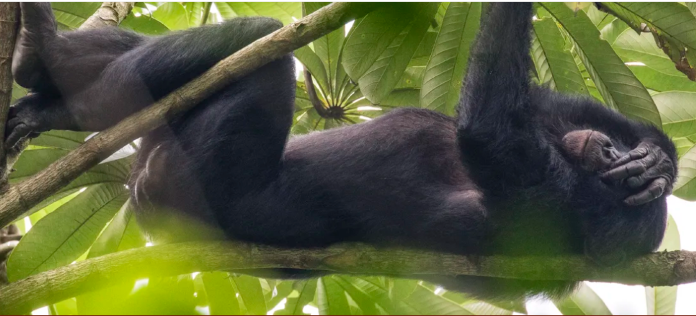
Clearly the sexy, peace loving, female led social model that we lived under for hundreds of thousands of years was a challenge to the patriarchs who sought to control humanity for their profit, and still do.
Yes, the species has to reproduce itself. And, as with bonobos, this can be done whilst experiencing exquisite pleasure, building deep intimacy and nourishing harmonious group dynamics.
The patriarchal model of sex which has always been, in essence, about one person (male) exerting their power over another person (female) comes with a huge emotional cost for both parties. I don’t accept it is sex that is causing emotional harm, it is the way in which we are conditioned into doing sex that causes emotional harm.
The bonobos that walk amongst you (cunningly disguised as humans so that you don’t notice us) solve many of our conflicts through sexual intimacy, heal deep emotional wounds with sex and deepen intimacy with ourselves and others through sex.
The sex we enjoy doesn’t cause us emotional harm, rather it heals the harm done to us by living under the patriarchal yoke.
Does too much abusive sex harm? Of course it does. Just a small portion of abusive sex causes emotional harm. The tired, fractured, impatient and increasingly toxic patriarchal model of sex does great harm which is why I won’t engage in it.
I control the sex I have very carefully. I have found a way to engage in healing, intimate sex on a daily basis with, by now, 100s of men and I have honestly never felt happier. Interestingly, despite my sexual appetite I do not partake in the swinging scene because the patriarchal model reigns supreme in that world and I have found the sex to be, at worst abusive, and at best, incredibly dull.
Mental harm? Scientists are working on the theory that oxytocin “the love hormone” could be used to reverse the effects of Alzheimer’s. Orgasm is accompanied by a massive download of oxytocin in the body. Thus, the sex that does not harm you physically or emotionally is looking very like it delays or even reverses Alzheimer’s.
Wouldn’t you prefer having an orgasm a day to doing a sudoku a day to keep your brain healthy and young?
Sex also increases levels of serotonin in the body, the neurotransmitter that plays such a key role in regulating mood, sleep, digestion and appetite whilst also influencing learning, memory and reducing stress.
It’s a no-brainer that we all want and need healthy levels of serotonin. In my 6 years of no sex my levels dropped so low that I needed to be prescribed pharmaceutical serotonin in the form of SSRI anti-depressants. As soon as my sex life picked up again I had no need for the drugs. Sex literally saved my life.
There is a belief amongst some people that reducing your sexual sensitivity (via circumcision) improves your cognitive performance but I fundamentally challenge this. You may have more time on your hands if you engage in less sex, but I would argue (as Naomi Wolf does in “Vagina”) that orgasm lights up the brain so powerfully that the orgasmically sexually active amongst us bring more brain power to each hour that we choose to work.
The combination of hormones and neuro-transmitters that flood our bodies during sex and orgasm actively keep our brains active, vibrant and healthy, they fuel our creativity and sharpen our cognitive capacity.
In other words GOOD sex is good for you mentally. Lots of GOOD sex is even gooder for you mentally!
Spiritual harm? – Sex has become my spiritual practice. This will confuse and concern Christian folk who do their spiritual in a church and their sexual in a bedroom with their spouse, never confusing the two (unless you are a leader in the Church in which case….maybe let’s not go there, let’s just quietly say “hypocrisy.”)
I can see the argument that having a lot of non-intimate sex with a lot of people who you avoid making connections with, could, and would be, spiritually depleting. Our souls yearn for connection. The physical act of sex can either be used as a means to build and nourish this connection, or it can be used simply to empty your ball sack (physically if you are a man, metaphorically if you are a woman.)
Sex can be spiritually nourishing and when it is not it can be spiritually destructive. Good sex, the sex I have, connects you to The Divine and the divine within yourself and is deeply nourishing spiritually.
When you feel The Divine moving as an energy through your body and connect through that energy to the divine within your partner’s body, you are doing as Jesus taught, and understanding that, “The kingdom of God is within you.”
Literally. It is the pure love and light you experience in your body. Especially, if you direct it there, in your heart chakra in the centre of your chest. Which makes the image my Catholic grandmother had in her home make so much more sense to me:

The gnostics were burned as heretics for this understanding. I live in luckier times. I experience this truth in my body every day, I can share my experiences with you in these blog posts and at most I will get blocked by Google and banned by Paypal, but I’m highly unlikely to get burned.
This knowledge is why tantric teachings were never written down until well into the 20th Century. Instead, like gnosticism, for hundreds of years they were passed verbally, in secret, between teacher and carefully vetted pupils. It wasn’t safe to know that The Divine is within you: that you are a fragment of The Divine incarnated into physical form for this human experience and that, thus, you are divine, until less than 100 years ago.
We are here. We are at this point of mass enlightenment. We desperately need humans to wake up to the truth that we are a peace loving, sexy species who, given half a chance, would solve all conflict in mass orgies instead of mass killings.
Having addressed the four areas in which the “abnormal” amount of sex I desire could be detrimental to me and found that, far from being harmful, sex, and lots of it is good for me in all four areas, I’m going to briefly examine the other defining word for addiction: “compelled.”
Compulsion is the “irresistible impulse to act, often despite negative consequences.” Impulsive behaviour comes from below the level of conscious thought and planning, thus consciously choosing to have sex, planning it, being very mindful about how and with whom you have it is surely the very opposite to being compelled by impulse?
I love sex. But I will not engage in it on terms that are not of my conscious choosing.
I once found myself in a very seedy sex club. I have never felt less sexual in my life and did not engage in any sex there. If I was a sex addict, I would have felt compelled to have sex with as many partners as I could handle for hour after hour. Because I am not a sex addict I felt no such compulsion, in fact I felt revulsion and we left not long after we’d arrived.
My argument is that you can’t call someone a sex addict simply because they have a higher (probably healthier) sex drive than you. 73% of the UK adult population are having sex less often than once a week. That is a dismally small amount of sex if you are interested in maintaining your physical, emotional, mental and spiritual health.
Yet because 73% is by far the majority and thus deemed “normal”, those of us who want more sex are dismissed by our less sexy partners as “sex addicts”. It’s a very convenient way of shutting down the conversation. It makes you – the “addict” – the problem, the one who needs to seek help on their own, absolving the less sexy partner of any responsibility to even enter into a conversation about your valid needs and desires.
Intimacy is built on these kinds of conversations. Every time one of us is mis-diagnosed as an addict in lieu of an honest conversation, that opportunity for intimacy is closed off in the relationship. This is how relationships die. You can’t stay in love with someone who would rather mis-diagnose you than have an honest conversation with you.
I suspect that there are thousands, if not millions of people, in the UK alone, who secretly fear they are sex addicts because their unwilling partner would rather mis-apply the label “addict” to them, than sit through, for them, an uncomfortable conversation. Which makes me angry. It honestly does. How can you learn and grow and evolve as a human being if your very essence is shamed, mis-labelled and avoided?
Humans desire to be seen, held and understood. We are much, much more like the sex loving bonobos than uptight, polite society is comfortable with.
Denying who we are, denying our sexy essence, denying our birthright to sexual pleasure and connection to the divine within our bodies does not make us happy or healthy.
It leads to a lot of deeply toxic behaviour and the breakdown of many potentially very loving relationships.
Recommended Further Reading:
“When God Was a Woman” by Merlin Stone
“Sex at Dawn – The Prehistoric Origins of Modern Sexuality” by Christopher Ryan and Cacilda Jethá
“Vagina – A New Biography” by Naomi Wolf





 girl-friend-experience-hampshire